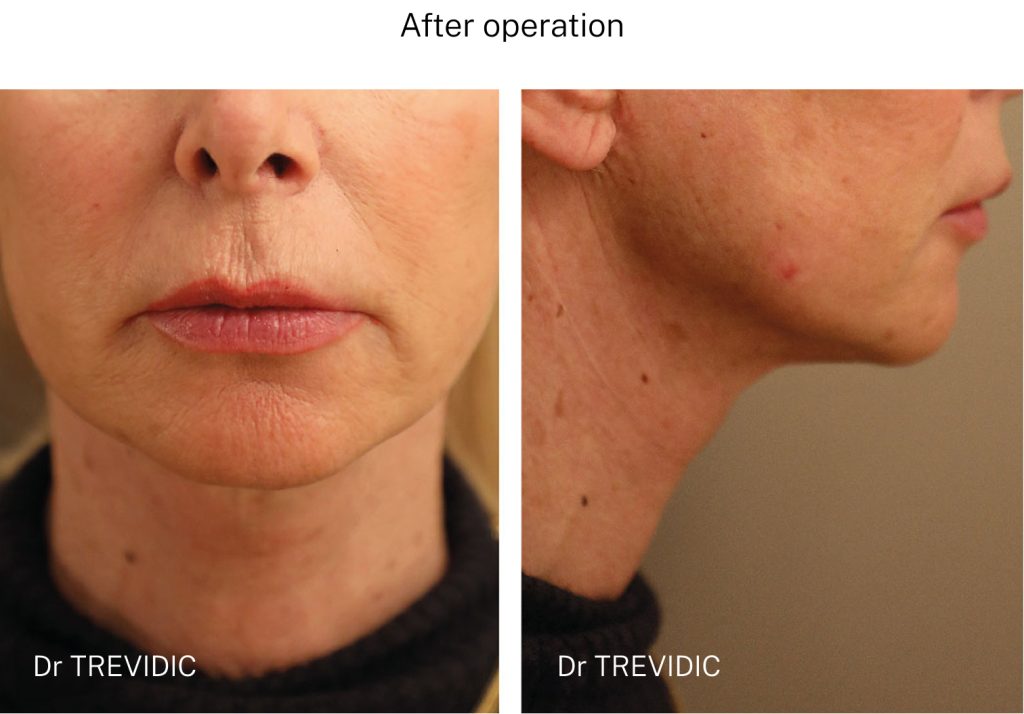
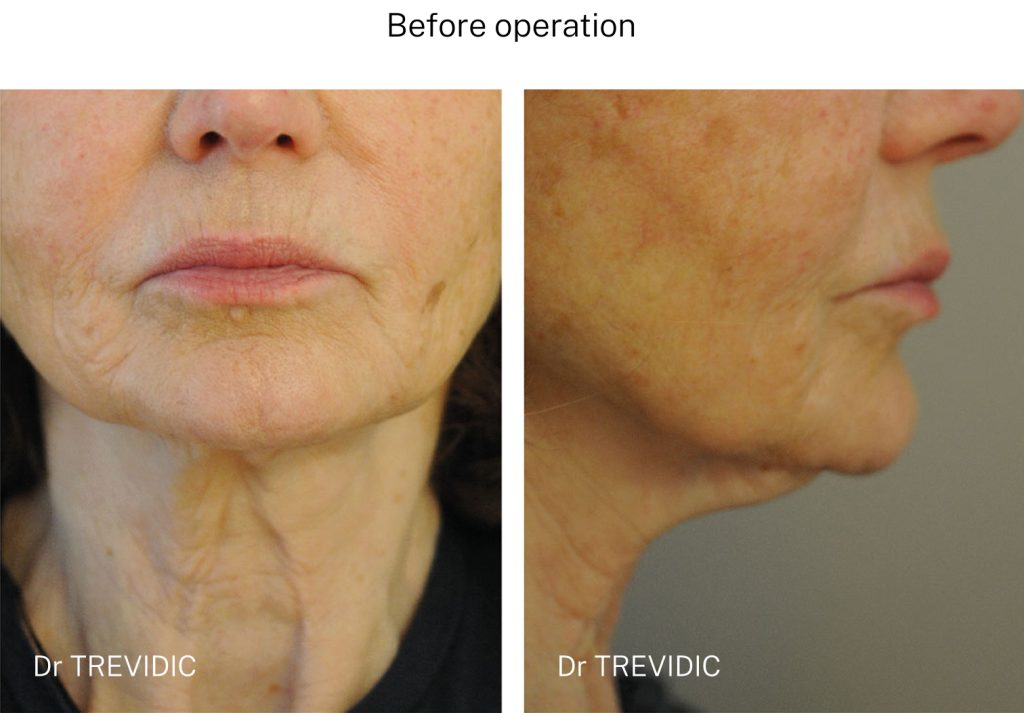
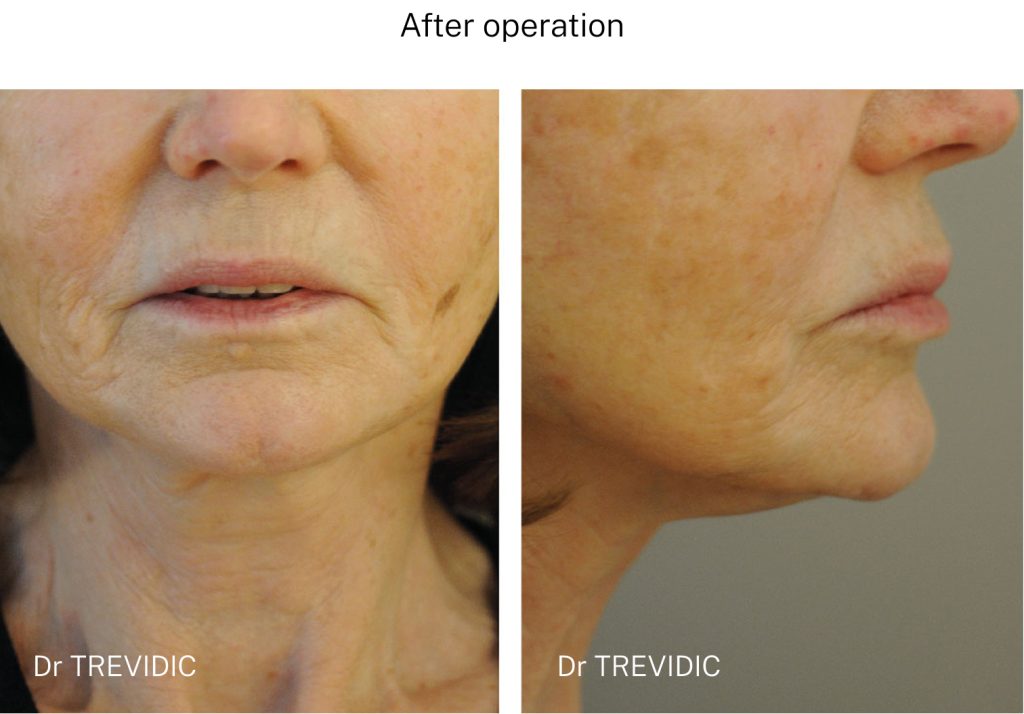
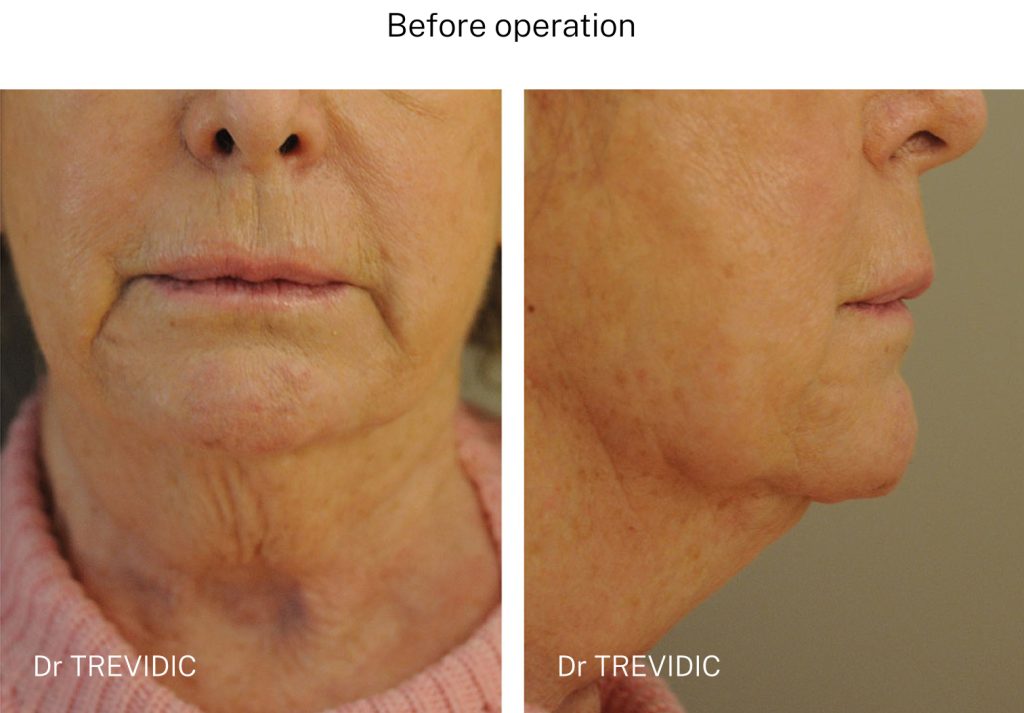
Neck & Face Lift by Dr. Trévidic
A New Surgical and Anesthetic Approach
Over the past 10 years, facelift surgery—like medicine as a whole—has undergone significant advances.
New drain-free surgical techniques, combined with recent progress in anesthesia (medications, equipment, and protocols), have transformed facelifts into procedures that can now be performed on an outpatient basis.
To break the vicious cycle of pain, Dr. Trévidic uses preoperative analgesia with long-acting bupivacaine (lasting up to 6 hours).
This approach reduces the need for anesthetic agents and opioids, which are often responsible for discomfort upon awakening. Moreover, pain can lead to hypertension, which in turn increases the risk of hematoma formation—another source of pain. Eliminating pain helps interrupt this cycle.
These technological innovations have made facelifts a much gentler experience.
Surgery remains the only effective treatment for facial sagging related to aging, as well as associated lower facial fat accumulation.
No injection, device, or aesthetic medicine technique can match surgery—not only in terms of the quality of the final result, but also its longevity.
A patient-centered approach, based on a detailed analysis of individual aging patterns, makes it possible to understand each patient’s unique (genetically influenced) aging process. This allows for natural, personalized results, as the surgeon targets and corrects the specific signs unique to each patient.
Neck Rejuvenation
Among facial aesthetic procedures, neck rejuvenation is one of the most frequently requested.
For many years, leading surgeons have sought to address the high recurrence rate (approximately 30% at one year) following cervicofacial lifting procedures. This issue typically arises between 1 and 3 years after surgery.
Ten years ago, Dr. Trévidic demonstrated that this recurrence is linked to the action of a neck muscle known as the platysma.
The Role of the Platysma
Neck aging manifests both vertically and horizontally. Vertical bands are known as platysmal bands, while horizontal lines are often referred to as “Venus rings.”
Contrary to common belief, these signs of aging are not caused by tissue sagging. Instead, they result from the action of a superficial neck muscle: the platysma.
With age, this muscle tends to tighten, making it more visible and pulling both the skin and underlying fat downward, leading to the formation of horizontal wrinkles.
A 2017 study conducted on patients with permanent unilateral facial paralysis demonstrated this phenomenon. These patients exhibited a platysmal band on the non-paralyzed side, while the band was absent on the affected side.
This finding indicates that these structures are not due to skin or muscle laxity, but rather to hyperactivity of the platysma muscle.
Additionally, these patients showed less skin ptosis on the paralyzed side compared to the non-paralyzed side. This observation suggests that the skin of the neck follows the position and action of the platysma—not the other way around.
This study introduced a new surgical paradigm: shifting from traditional tightening of neck structures to targeting the root cause—excessive muscle activity—through platysma denervation.
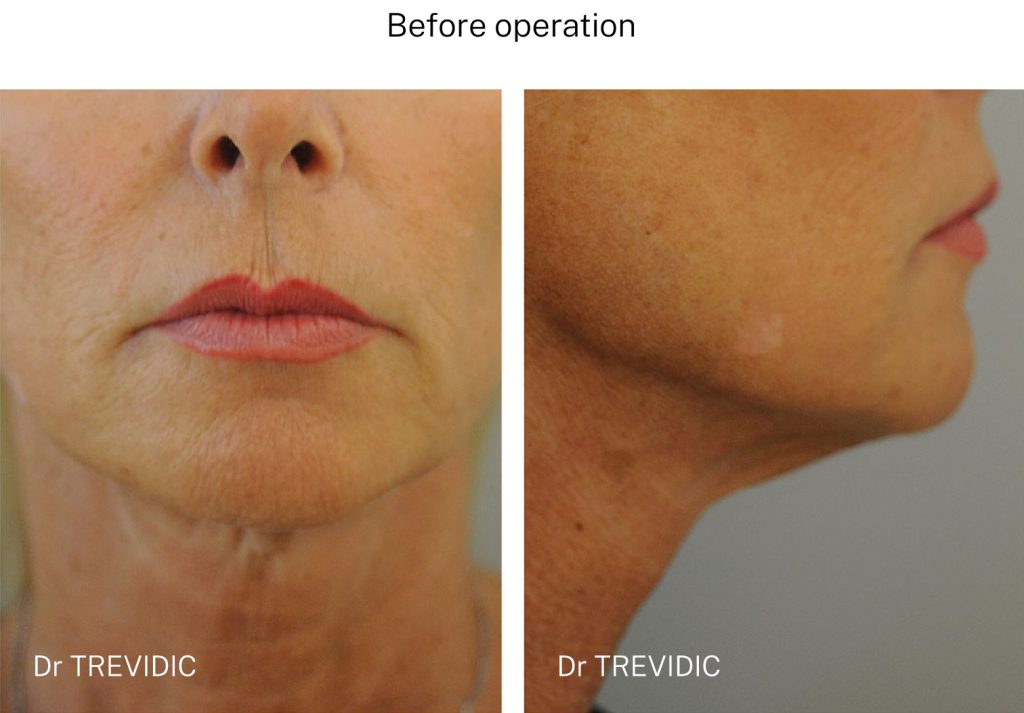
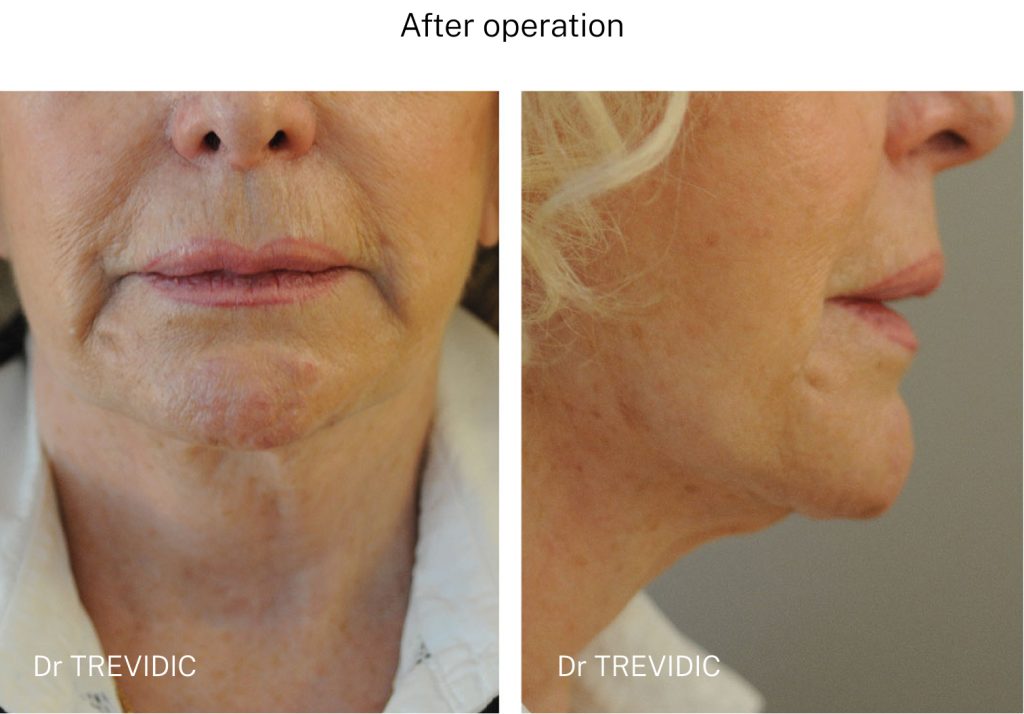
Technique
Dr. Trévidic’s Neck and Face Lift embodies this new approach, preventing platysma contraction that pulls the skin downward. This represents a major shift in the surgical management of the aging neck.
Technically, the procedure involves sectioning the nerve branches that supply the platysma muscle.
Through anatomical and surgical research conducted by the Expert 2 Expert group, intentional platysma denervation combined with deep plane facelift techniques provides an effective solution for neck treatment.
A larger study published in 2025 confirms a low complication rate, a significant reduction in recurrence, and high patient satisfaction.
10 Years of Research Leading to the Development and Mastery of Dr. Trévidic’s Neck and Face Lift
The development of this lifting technique required 10 years of research.
Each of the three stages of this research was validated by publication in internationally recognized peer-reviewed journals.
These three stages are as follows:
First stage: Understanding platysmal bands and their consequences.
Neck aging is linked to the action of the platysma muscle, which pulls the cervical skin downward.*
Second stage: Initial anatomical and surgical research on platysma denervation, including feasibility and early clinical cases.**
Third stage: Validation and simplification of the technique in a large patient series.***
*Platysma Bands: Is a Change Needed in the Surgical Paradigm? Trévidic P, Criollo-Lamilla G. Plast Reconstr Surg. 2017 Jan;139(1):41-47.
**Surgical Denervation of Platysma Bands: A Novel Technique in Rhytidectomy. Trévidic P, Criollo-Lamilla G. Plast Reconstr Surg. 2019 Nov;144(5):798e-802e.
***Denervation Neck Lift: An Updated Rhytidectomy Technique and Prospective Follow-Up of 80 Patients. Criollo-Lamilla G, Trévidic T, Imanilov A, Trévidic P. Facial Plast Surg. 2025 Jun 17.
Neck and Face Lift: A Long-Lasting, Reliable Cervicofacial Rejuvenation Procedure